Showing posts with label Reading Diary. Show all posts

Monday, April 25, 2016

Week 14 Reading Diary: The Indian Storybook continued

The Indian Storybook by Richard Wilson

For the rest of this week's reading assignment, I finished reading the assigned stories in The Indian Storybook by Richard Wilson. The last story, Shakuntala, discusses the love story between King Dushyanta and Shakuntala. King Dushyanta meets the beautiful Shakuntala while he while on a hunting trip in the forest. (So much happens in the forest in the Mahabharata). The two fall in love with each other and get married, without Shakuntala's father knowing. Their witness was mother nature. When King Dushyanta had to leave, he promised he would send for someone to pick Shakuntala up. To show her his promise, he gives her a ring. One day, a sage visits Shakuntala, but she is so lost in her thoughts of King Dushyanta, that she does not hear the sage's calls. The sage becomes very angry and curses Shakuntala. He tells her that the man she is thinking about will not remember her. And King Dushyanta will only remember her if she comes up with a significant souvenir. Shakuntala is pregnant with the king's child, so her father sends her to the royal court. On the way, the ring she was given falls into the river. So when they met, King Dushyanta couldn't recognize his wife, because she was unable to present a significant souvenir. Shakuntala can't bare to live without King Dushyanta remembering her so she pleas to the gods to help her disappear from earth. After a fisherman finds the lost ring, King Dushyanta remembers his wife. They get back to each other and have a son, named Bharat. 


(King Dushyanta and Shakuntala. Source: Wikimedia Commons)

Bibliography. The Indian Storybook, Richard Wilson. (1914)

Week 14 Reading Diary: The Indian Storybook

The Indian Storybook by Richard Wilson

For the final week of reading for Indian Epics, I have chosen to read some famous Indian stories. For the first part of the week, I will be reading about the dispute between Vishvamitra and Vashishta over the ownership of a sacred cow that grants wishes. The sacred cow that the two men were fighting over was named Sabala. King Vishvamitra was a well-liked king, but he was always in search of an enemy. The only problem with this was that he befriended everyone he met, so it was hard to find an enemy. King Vishvamitra was an avid hunter and enjoyed the hunting for game. One day he went to the forest with some of his men to hunt. As he and his men were wondering, they came across the home of the sage, Vashishta. Vishvamitra and his men were hungry, so Vashishta offered him food. Vashishta had an entire feast prepared for the men. Vishvamitra was confused as to how he was able to make such a grand feast while isolated in the forest. Vashishta went on to tell the king that Indra blessed him with a sacred calf that was able to yield any sort of riches. Vishvamitra became angry when Vashishta refused to give him the cow, after he offered thousands of dollars. Regardless of the refusal, Vishvamitra took the cow anyway. The cow grew very angry at Vishvamitra and was able to conjure up an entire army. Vishvamitra soon ended up becoming a hermit after seeing that the Kshatriyas had to power when they were up against Brahmins.  


(Sabala the Sacred Cow. Source: Wikimedia Commons)

Bibliography. The Indian Storybook, Richard Wilson. (1914)

Wednesday, April 20, 2016

Week 13 Reading Diary: Bhagavad Gita continued

Bhagavad Gita by Edwin Arnold

For the rest of week 13, I finished reading the last chapters of the English version of Lord Krishna's Celestial song, the Bhagavad Gita. Like I previously stated, I know two of chapters of the Gita by heart. During middle school, when I went to Sunday school, my class was given the task of memorizing chapters 9 and 15. For this section of reading, I decided to focus on chapter 12, Of Religion of Faith, and chapter 15, Of Religion by Attaining the Supreme. Chapter 12 involved Lord Krishna telling Arjun about faith. Lord Krishna tells Arjun that the most pure Yogis are the ones who have worship with ultimate faith and focus all their energy on Him (Krishna). A true Yogis devotion is one that is motiveless and full of intense love for God. Lord Krishna explains that a devotee should become formless when praying, so that he can feel the existence of the self alone. Chapter 15 is said to summarize the entire essence of the Gita and the Vedas. Chapter 15 begins by talking about an upside-down tree, symbolizing the nature of the world. The root of the tree symbolizes the eternal essence. The growths of the tree symbolizes our existence in the world. The growth of the trees symbolizes sense objects. The sense objects generate desire, which generates actions, which bind us to the tree branches. In order to end this cycle of desire and action, one must go to the source of the tree, God. 


(Lord Krishna reciting the Gita to Arjun. Source: Wikimedia Common)

Bibliography. Bhagavad Gita, Edwin Arnold. (1885)

Week 13 Reading Diary: Bhagavad Gita

Bhagavad Gita by Edwin Arnold

For week 13 of Indian Epics, I have decided to read the English version of the Bhagavad Gita. This is the Celestial Song that Krishna sang to Arjun on the battlefield at Kurukshetra when he was timid about fighting his family members on the Kaurava side. I have recited the full Gita twice in my life. I actually have two chapters (9 & 15) memorized by heart. I know the main points and lessons to be learned but I definitely benefited from reading this version. The Bhagavad Gita is the main holy Hindu scripture. It is known as the book of humanity. My favorite chapters from this first section of readings are Chapter 6, Of Religion of Restraint, and Chapter 9, Of Religion by the Kingly Knowledge and the Kingly Mystery. In Chapter 6, Lord Krishna explains to Arjuna that the true Yogi, or Seeker, is one who abandons the fruits of his actions, meaning he does not care for any gains he may receive. Lord Krishna talks about being in moderation when it comes to your mind, body, and soul. If this is accomplished, you will unite with God and see him in all objects and beings. He tells Arjun about the benefits of yoga and meditation. In Chapter 9, Lord Krishna tells Arjun about the most secret experience that is hidden from all except the Brahman. He tells Arjun that this knowledge is both intellectual and spiritual knowledge. This knowledge can only come from true spiritual experience. This supreme truth is permanent because once you attain it, it can never be lost. 


(Krishna reciting Bhagavad Gita to Arjun. Source: Wikimedia Commons)

Bibliography. Bhagavad Gita, Edwin Arnold. (1885)

Thursday, April 14, 2016

Week 12 Reading Diary: Cradle Tales of Hinduism

Cradle Tales of Hinduism

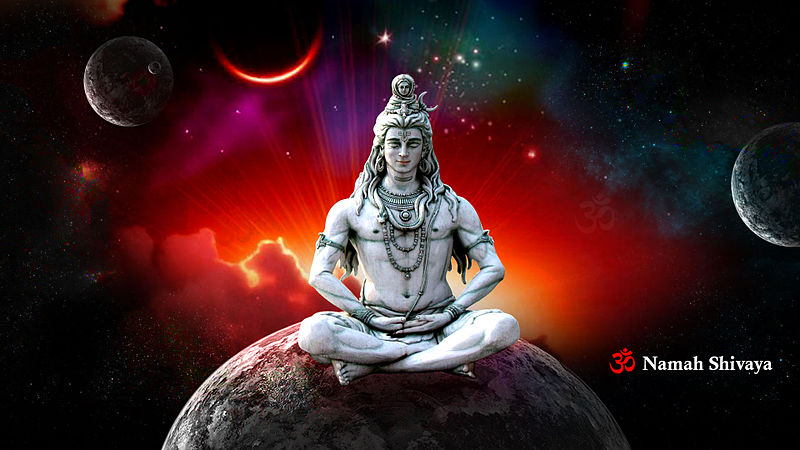
For the remainder of week 12, I decided to read another book by Sister Nivedita. In this book, Cradle Tales of Hinduism, she write about many different gods, goddesses, and important figures of Hinduism. Like earlier this week, I decided to focus on Lord Shiva, the Great God. After reading Myths of the Hindus and Buddhists and Cradle Tales of Hinduism, I feel like I more fully understand who Lord Shiva was. I like the set up of Cradle Tales of Hinduism a bit more. Earlier this semester, I read about Lord Krishna in this same book. In the sections about Shiva, Sister Nivedita goes into much detail about his life. What I really like about Lord Shiva is that he doesn't look like a god. His appearance is one of a holy and pious man. He walks around with a begging bowl in one hand and a staff with a trident in the other. He sometimes goes door to door asking for offerings. He performs eternal meditation deep in the Himalayas. Sister Nivedita does a magnificent job describing Shiva in many different ways. She describes him as the simple god, never asking for anything. All he wants is to destroy ignorance and let light shine. He has been called the Lord of the Animals, the Destroyer of Ignorance, and much more. I would love to write a story about Shiva's peaceful life up in the mountains. I could also write about his marriage to Sati and all that they endured. 


(Lord Shiva in eternal meditation. Source: Wikimedia Commons)

Bibliography. Cradle Tales of Hinduism, Sister Nivedita. (1907)

Wednesday, April 13, 2016

Week 12 Reading Diary: Myths of the Hindus and Buddhists

Myths of the Hindus and Buddhists

For this week's reading, I wanted to learn more about some of the Hindu gods and goddesses. I decided to focus on Lord Shiva. Growing up, I was taught about many of the gods and goddesses, but I was only given surface knowledge. I decided to read Sister Nivedita's, Myths of the Hindus and Buddhists. Earlier in the semester, I read another one of her works and enjoyed it. Sister Nivedita opens the chapter about Shiva by informing that he is the Great God. He is Brahma, Vishnu, and Rudra, who creates, maintains, and destroys. Shiva was married to Sati. Sati's father, Daksha, hated Shiva and talked ill of him any chance he could get. When Sati went back to her maternal home after her marriage, she was greeted by her father's disapproval of Shiva. Due to this, she ultimately ended up dying. She couldn't hear ill of her husband and lord. When Shiva heard of Sati's death, he was enraged. He sent men to kill Daksha and any Brahmin or god that got in their way. Because of Shiva's anger, Brahma advised the gods to make peace with Shiva because he was capable of destroying the whole universe. There was a myth that after her death, Shiva held Sati's dead body across his back, destroying everything he passed. After seeing this, Vishnu began throwing discus after discus at Sati's body until Shiva realized that he didn't have that weight on his back any longer. Shiva returns to his home and continues his eternal meditation. I am excited to read about Shiva is Sister Nivedita's other book, Cradle Tales of Hinduism. 


(Shiva carrying Sati's body. Source: Wikimedia Commons)

Bibliography. Myths of the Hindus and Buddhists, Sister Nivedita. (1914)

Thursday, April 7, 2016

Week 11 Reading Diary: Indian Fables and Folklore continued

Indian Fables and Folklore by Shovona Devi

For the rest of this week, I finished reading the many fables in Shovona Devi's collection of fables, Indian Fables and Folklore. My favorite thing about these short stories is that, not only do they have powerful messages, but they relate to the many happenings of the great Indian epic, the Mahabharata. Devi incorporated many of the characters and events of the Mahabharata into these stories. For the second part of this reading, I have decided to focus on two fables. My two favorites are The Counterfeit Krishna and The Monkey Banker. In the Monkey Banker, this guy is basically told that money will give him everything. So he goes about and tries to earn money but he is tricked by this lady. She takes all of his money. He find a monkey to con her. He teaches the monkey to swallow gold and bring it back up on command. So when he goes back to the lady to settle his debt, he shows her this monkey. She offers to give him everything she took from him, plus all of her extra stuff. The moral of the story is that whatever is gained from bad ways, will be lost. I really liked the counterfeit Krishna story because it reminded my of how powerful Krishna Bhagvan is. People can try to play his imposter all they want, but in the end, he will prevail. 


(Krishna with discus in hand. Source: Wikimedia Commons)

Bibliography. Indian Fables and Folklore, Shovona Devi. (1919)

Wednesday, April 6, 2016

Week 11 Reading Diary: Indian Fables and Folklore

Indian Fables and Folklore by Shovona Devi

For week 11, I have decided to browse through the book, Indian Fables and Folklore. This collection of fables and short tales was compiled by Shovona Devi. I thought it was really cool that she was the niece of the well-known write, Rabindranath Tagore. In 1913, he was the first non-European to win the Nobel Prize in Literature. As I was reading the fables in this book, I picked out a few that I particularly enjoyed. I'm glad I chose this reading option this week, because it will give me great ideas to base my own storytelling off of for this week. The fables I liked most were The Elephant-Fighting Hare and A Rat's Swayamvara. The Elephant-Fighting Hare one was about a tiny hare that challenged a large elephant to a fight. The elephant ignored the hare and went on doing his own thing. But, when the hare called the elephant a coward, he got angry and tried to fight the hare. The hare, being small and agile, was able to dodge the elephant's many attacks. After a while, the elephant tried to squash the hare, but the hare got out of that too. As the elephant kept on squashing the ground, assuming the hare was there, the hare quietly ran up onto the elephant. This little fable basically talks about not underestimating someone because of their size. The Rat's Swayamvara was interesting too because it was based on the epic stories' concept of how a lady will find her husband. This rat became a girl and was raised until it was time for her to be married. Her father asked all the mightiest beings to marry her, but they all turned him down, stating that there was someone mightier out there. In the end, the girl ends up with a rat. 


(Elephant. Source: Wikimedia Commons)

Bibliography. Indian Fables and Folklore, Shovona Devi. (1919)

Thursday, March 31, 2016

Week 10 Reading Diary: The Pandav Princes continued

The Pandav Princes by Wallace Gandy

As this week is coming to a close, I finally finished the reading I started last week, The Pandav Princes. Wallace Gandy wrote this in order to highlight the lives of the five Pandav brothers. His work highlighted many important aspects of the epic Indian story, The Mahabharata. The last section I read discussed the Holy Song and how Krishna convinced Arjun that he must fight for what is right. In these last chapters, Gandy discusses many of the important events that happened during the battle at Kurukshetra. He talks about how Bhishma dies and also how Drona dies. He also talked about how Abhimanyu dies. The chapter that I focused on was The War Ends. At the beginning of this chapter, Yudhishthir comes from the battlefield to talk to Arjun and Krishna. He asks Arjun if he had killed Karna yet. Yudhishthir goes on to insult Arjun, saying he is only mighty in looks, not action. At this, Arjun becomes very angry and almost slays his own brother/king. Krishna intervenes and told Arjun not "to give way to sinful anger." After both Yudhishthir and Arjun calmed down, Arjun left to go defeat Karna. He was ruthless in his attempts, but so was Karna. The only reason Arjun gained an upper hand was because, at one point, Karna's chariot wheel got stuck in some mud. After some time, Arjun had so much anger in him that he sent a mighty arrow through Karna, finally killing him. The war had finally ended. I would write a story and change up the part where Karna's wheel got stuck. This would make the end of the battle more fair. 


(Arjun slays Karna. Source: Wikimedia Commons)

Bibliography. The Pandav Princes, Wallace Gandy. (1915)

Week 10 Reading Diary: The Pandav Princes continued

The Pandav Princes by Wallace Gandy

For the remainder of this week, I am going to be finishing up The Pandav Princes by Wallace Gandy. This book goes into more detail about the five Pandav princes and their stories and happenings. Since I fell behind last week, I am just now completing part C of these readings. A lot has happened in this part, but I am choosing to focus on the chapter that is called The Holy Song. In this chapter, Krishna Bhagvan explains, in detail, the law of duty for man's guidance. This chapter opens by explaining the intense divide between the Kauravas and Pandavs. At this point, "there was no longer any possibility of peace." Krishna was adviser for the Pandavs. As the fighting commenced, Arjun turned to Krishna (his charioteer) and asked him to take the chariot to the center of the battlefield. Krishna took the chariot to where Arjun asked and he looked around. All around him he saw no one but "grandsires, uncles, cousins, tutors, sons and brothers." At this site, he was full of sorrow and didn't know what to do. Arjun did not care about winning, he did not want to fight anyone. Upon this, Krishna replied, "it is disgraceful, contrary to duty, and is the foundation of dishonor." Krishna told Arjun that he was being unmanly and needed to realize why he must fight. Krishna told Arjun that "the natural duties of thy rank are bravery, glory, fortitude, rectitude, not to flee from the field." After hearing this "holy song" of Krishna's, Arjun knew what he must do. For my story this week, I have this idea of two best friends fighting and another friend playing a role similar to Krishna's. Except, I want the friend to tell the two fighting that they shouldn't throw away their friendship. 


(Krishna and Arjun on the chariot. Source: Wikimedia Commons)

Bibliography. The Pandav Princes, Wallace Gandy. (1915)


Tuesday, March 29, 2016

Week 10 Reading Diary: The Pandav Princes

The Pandav Princes by Wallace Gandy

This week, I am finishing reading The Pandav Princes by Wallace Gandy. Last week, I was unable to read more than one part of the story so this week I plan on finishing the next three parts this week. At the beginning of this section, A Fatal Passion, Sisupala (king of Chedi) went on and on about how Krishna should not receive any honor because he is neither "a priest, preceptor, king nor chief." At this, Krishna took no offense and basically forgave Sisupala even after all of his insults. He said that Sisupala is one of his own, because he is the son of one of the daughters of his own race. He goes on to talk about how Sisupala burnt down Krishna's seaport of Dwarka. Sisupala was not a good man. He did many wrongs to many people. After some time, Krishna took his mighty discus and severed Sisupala's head. Many people took this as a sign that Sisupala's sins and wrongdoings had been washed away. He was pure again. Yudhishthira ordered Sisupala's last rites to be completed with full regal honors. I have a cool idea to write a story based on this short scene from the book. I am thinking about writing a short story where Krishna explains all of Sisupala's wrongdoings and then as he is going to finish him with his discus, something happens to Sisupala's body. Instead of his head cutting off, I was planning on writing about how his body sort of floated into the air. His body went back in time and he fixed all of his wrongdoings. 


(Krishna kills Sisupala. Source: Wikimedia Commons)

Bibliography. The Pandav Princes, Wallace Gandy. (1915)

Thursday, March 24, 2016

Week 9 Reading Diary: The Pandav Princes

The Pandav Princes by Wallace Gandy

For the last 8 weeks, I have read various versions of the great Indian epics, The Ramayana and The Mahabharata. I have read in depth about many different characters, including Sita, Rama, Krishna, and Draupadi. For this week's reading assignments, I have chosen to read The Pandav Princes by Wallace Gandy. This book is a version of the Mahabharata that mainly focuses on the five Pandava brothers. This book goes into detail about many stories about Yudhishtira, Bhima, Arjuna, Nakula, and Sahadeva. One story about Bhima stuck out to me. In this story, Duryodhan essentially poisoned Bhima and left him to be eaten by snakes in the Ganges. Fortunately, Bhima was able to survive the attacks of the Nagas. It would be fun to write a story based on this event. I would enjoy changing up the story and having Bhima realize he was being poisoned by Duryodhan. I would make it where Bhima showed his god-like power before Duryodhan was able to roll him into the sacred river, Ganges. I also really enjoyed reading more about Arjuna. He is easily my favorite Pandava brother. My favorite part of the section titled The Tournament was when Karna came and showed up Arjuna in all the tasks. After the fact, Karna challenged Arjuna. If I were to write about this competition between Karna and Arjuna, I would definitely highlight Pritha's role as mother of them both. I think it would be a good story where Pritha chooses one son over another. 


(The Battle between Karna and Arjuna. Source: Wikimedia Commons)

Bibliography. The Pandav Princes, Wallace Gandy. (1915)

Thursday, March 3, 2016

Week 7 Reading Diary: Cradle Tales of Hinduism continued

Cradle Tales of Hinduism: Krishna

The past few weeks, I have been reading the Indian epic story, the Mahabharata. This week, I chose to read a different aspect of the story. This story, by Sister Nivedita, covers the life of Lord Krishna. I have grown up knowing about Krishna Bhagvan and his stories. My favorite one was how he tried to steal butter from people's homes during his childhood. Sister Nivedita does a good job of incorporating all the different aspects of Lord Krishna's life into consolidated chapters. Tonight, I finished reading the second part of her stories about Krishna. These chapters covered Krishna's return to Mathura and the Doom of the Vishnis. My favorite chapter being the last one, the Doom of the Vishnis. This chapter began by discussing how peaceful Mathura had become years after the great war on the battlefield of Kurukshetra. But amongst all the happiness, whispers began about some lords of the court who played practical jokes on three divine sages. The people of Mathura began to feel uneasy. Amongst all the rumors, Lord Krishna said "that which is to be will surely happen." I really liked this quote because it's very true. Whatever is going to happen in life, will happen regardless of people's actions. As chaos was ensuing, Krishna stayed calm and told the Vrishnis to go to the coast and bathe in the sacred ocean waters. Lord Krishna warned the people to stay away from alcohol, for that would be their downfall. But, since it was their time to perish, they were lured in by a grand feast where wine was served. Fights broke out in the drunken stupor and ultimately led to the deaths of many. I would be very interested in writing a story about the affects of alcohol on the body. I would incorporate Lord Krishna's warnings into my story. 


(Statue of Lord Krishna. Source: Wikimedia Commons)

Bibliography. Cradle Tales of Hinduism, Sister Nivedita. (1907)

Wednesday, March 2, 2016

Week 7 Reading Diary: Cradle Tales of Hinduism

Cradle Tales of Hinduism: Krishna

For the past two weeks, I read the online public domain edition of the great Indian epic, the Mahabharata. This epic story was filled with many characters and a great deal of drama and action. I really enjoyed reading it. This week, I chose to read parts of the book, Cradle Tales of Hinduism, by Sister Nivedita. The sections I read were focused on Lord Krishna's stories and his significance in the Hindu religion. The part I enjoyed reading most in the first section of Sister Nivedita's storytelling was about Krishna's birth. They say that his mother and father, Devaki and Vasudeva, were brought together by Devaki's brother, Kansa. Kansa was a tryant leader of Mathura. As he was driving his sister and her new husband to their new home, he received news that the eight child of the couple would be the reason for his downfall. For this reason, Kansa imprisoned them and successfully killed their first seven children. Their eighth child was born in the prison and instantly Devaki knew he was special. He had four arms, that each held a shank, discus, mace, and lotus. In order to save this child, Vasudeva took him to Gokool and switched out his son with Nanda's newborn daughter. When Kansa found out the eighth child was born, he went to the prison ready to slay the newborn who would be the reason for his downfall. When Kansa saw a girl instead of a boy, he was confused. The prophecy said that a boy would be born. Regardless, Kansa took precautions and was ready to kill the girl. As he was picking her up, the form of a Goddess arose and warned him that the boy who was going to destroy him was still alive in Gokool. I have always enjoyed hearing about Krishna's birth because it's such a unique story. If I were to write a story based on this birth, I would change it up and make it where Vasudeva didn't take Krishna away. Instead, I would show Krishna's powers from birth and write about how he was able to dodge Kansa's attempts at killing him. 


(Birth of Krishna. Source: Wikimedia Commons)

Bibliography. Cradle Tales of Hinduism, Sister Nivedita. (1907)

Thursday, February 25, 2016

Week 6 Reading Diary: PDE Mahabharata continued

PDE: Mahabharata by various authors

For the end of this week, I finished reading the great Indian epic, Mahabharata. This epic story was full of drama and had many different characters to keep up with. Although I have previously read and watched the Mahabharata, I found myself learning new things as I read. My parents read bits and pieces of the Mahabharata to me most nights when I was a kid, but I guess some of the stuff left my memory. The ending of the Mahabharata really stuck out to me, especially the death of Krishna. The eerie setting in Dwaraka really set the mood for Krishna's death. The description of the town was very vivid. "Then the night was haunted by a black woman with yellow teeth who grinned horribly at house doors." I got a clear visual of a creepy looking lady who just looked like death. Krishna's actual death reminded me of the Achilles' heel reference. Krishna was shot in the only spot on his body where he could be mortally wounded, which ultimately lead to his death. The idea of achilles' heel standing for weakness in spite of overall strength comes from Greek mythology. Achilles was dipped into a river that was supposed to give him invulnerability. In order to get the magical water on him, Achilles was held by his heel and because of that, his heel was untouched by the water, leaving his heel vulnerable. If I were to write a story about this, I have this idea to combine Krishna's death and Achilles' story into one. 


(Achilles dipped in River Styx. Source: Wikimedia Commons)


Tuesday, February 23, 2016

Week 6 Reading Diary: PDE Mahabharata

PDE: Mahabharata by various authors


This week, we are finishing up the Indian epic, Mahabharata. This epic story has a lot of drama. A lot. At one point, I couldn't stop reading even though I knew I had to sleep. For my reading diary, I decided to focus on the section that discussed Bhima and Hanuman's encounter. I chose to focus on this part of the story because I am doing my Storybook over Hanuman and his stories. I actually planned on writing about this as part of a story. The section talks about how Bhima and Hanuman are said to be half-brothers; they are both the sons of the wind god, Vayu. I liked how they briefly explained the caste system and how Hanuman explained it all to Bhima. I decided to read more into the different ages. Krita Yuga is the age of truth, when the gods governed all the land. Every manifestation is close to the pure ideals and and intrinsic goodness prevailed. The Treta Yuga was when sacrifices were introduced and people grew more materialistic. The Dwapara Yuga is the third age and it is characterized by the introduction of the four castes, brahmin, vaishya, kshatriya, and shudra. The caste system is very interesting because it brought about different roles for each person in a community. The final age, the Kali Yuga, is the age of vice where human civilization degenerates. I am interested in writing a story about modern day friends who are all parts of different caste systems and how they work together. 


(Pyramid of caste system. Source: Wikimedia Commons)

Thursday, February 18, 2016

Week 5 Reading Diary: PDE Mahabharata continued

PDE: Mahabharata by various authors

After reading the next handful of sections of the public domain version of the great Indian epic Mahabharata, I became very intrigued by a few of the many stories. The one I enjoyed most was reading about how Draupadi would be married to all five of the Pandavas. The mother of the Pandavas, Kunti, had made an accidental command and ordered that her sons marry one woman. I was instantly interested in this story because throughout the Ramayana and the parts I have read of the Mahabhararta, only men had multiple wives. I had never read about women having multiple husbands. I was especially curious about how it would be to be married to five brothers. That must definitely be weird. At the beginning, it was Arjuna who won Draupadi at the swayamvara, but Arjuna told the oldest brother, Yudhishthira that "thou art our elder brother and we are thy servants." For this reason, Arjuna felt that Yudhishthira deserved to marry Draupadi. The funny part in all of this commotion was that each brother secretly wanted Draupadi. When they couldn't decide, the decision was put on Drupada, father of Draupadi. Drupada asked the eldest Pandava whether he would allow Arjuna to marry Draupadi. Yudhishthira said that he would need advice from the great rishi, Vyasa. Vyasa was the one who announced that it was already written that Draupadi would marry all five of the Pandava brothers. To change this ending up a bit, I would write a story about how Draupadi was given the choice of which brother she would marry. 


(Draupadi and the Pandava brothers. Source: Wikipedia)

Wednesday, February 17, 2016

Week 5 Reading Diary: Mahabharata PDE

PDE: Mahabharata by various authors 

This week we are starting to read the Mahabharata. I chose to read the stories from the online public domain edition because it is far more convenient for me. I am excited that we are finally starting the Mahabharata. I am familiar with the stories because I have grown up hearing them from my parents. We even read Mahabharata comics and watched cartoon versions of the great epic. The first thing to catch my attention when I started reading was the part about how Ganga wanted her son to be very powerful, but never be married or have children. I was curious as to why she would want that. I really liked the part in King Shantanu and Ganga when Ganga said that if she was to marry him, she still wanted her freedom and independence. That's rare to read about in these epics. Ganga was very adamant on returning to her celestial form. "She suddenly vanished before his eyes." Ganga still came back to King Shantanu for a moment, to give him his son, Devavrata. What I liked about Devavrata was how he received his other name, Bhishma. He wanted to help his father, King Shantanu, marry Satyavati. In doing so, he went to her father and vowed that if Satyavati would marry Shantanu, he would never take the throne. He would remain unmarried and without children. This is just what Ganga wished for her son. I want to retell this story and touch more on Bhishma's side. I want to find more emotion behind the "terrible vow" that he promised. 


(Devavrata takes the vow. Source: Wikimedia Commons)

Sunday, February 14, 2016

Week 4 Reading Diary: Nine Ideal Indian Women continued

Nine Ideal Indian Women: Sita, Promila, and Shankutala

Early this week, I read Sunity Devee's rendition of Sita's story. For the rest of this week's Ramayana readings, I decided to read more of Devee's work. This time I focused on Promila's story. Promila is Ravana's son's wife. Promila was a very dedicated wife. When Indrajit set out to defeat Rama for killing his brother, Birbahoo, she felt empty. "Without him, life became a void, a pathless chasm, into which she could not see." When Indrajit didn't return at sunset, Promila became so distressed that she decided to set out in search of him. "No gates can hold me back, no enemy intimidate me. I go to join my lord." She was so adamant on being with her husband that she risked her life. It was saddening to read about Promila and Indrajit's last good byes before Indrajit left to face Rama and Lakshmana. Promila tried to be strong and put on a brave face, but in the end, the grief of losing her husband overcame her. When Promila found out about Indrajit's death, she was distraught. Promila was so devoted to her husband that she literally couldn't live without him. If I was to write a story about Promila, I would definitely change her ending. I would write her as a strong and independent woman who was able to live happily with the memories of her beloved Indrajit. 

Bibliography. Nine Ideal Indian Women, Sunity Devee. (1919)


Thursday, February 11, 2016

Week 4 Reading Diary: Nine Ideal Indian Women

Nine Ideal Indian Women: Sita, Promila, and Shankutala 

For this week's reading, I decided to explore the works of Sunity Devee. Her book focused on nine ideal Indian women, which included stories about Sita and Ravana's son's wife, Promila. I read the first section, which focused on Sita. I was instantly intrigued by this story because it started off by explaining Sita's birth. It is known that Sita was found in a pitcher in the furrows of Janaka's kingdom. Right after describing Sita's "birth", Devee goes on to describe that a handful of sages gave Ravana's messenger that particular pitcher and told Ravana that "it carries a crushing significance which will end his royal splendor." I really liked how Devee broke up the beginning of the Sita chapter and explained Sita's birth and then simultaneously described Rama's birth and childhood. I enjoyed how she went into great detail about Janaka's test to find Sita's husband. She successfully explained the importance of the bow and how only a man with divine attributes would be able to break the bow. My favorite part of this chapter was how Devee emphasized that Rama and Sita fell in love at first sight and immediately became devoted to one another. Rama was so devoted to his father that, even though he already loved Sita and wanted to marry her, he waited to accept until he received Dasharatha's approval. My favorite part about the Sita chapter is that the author had to incorporate all of Rama's story because Sita is incomplete without Rama. 

Bibliography. Nine Ideal Indian Women, Sunity Devee. (1919)